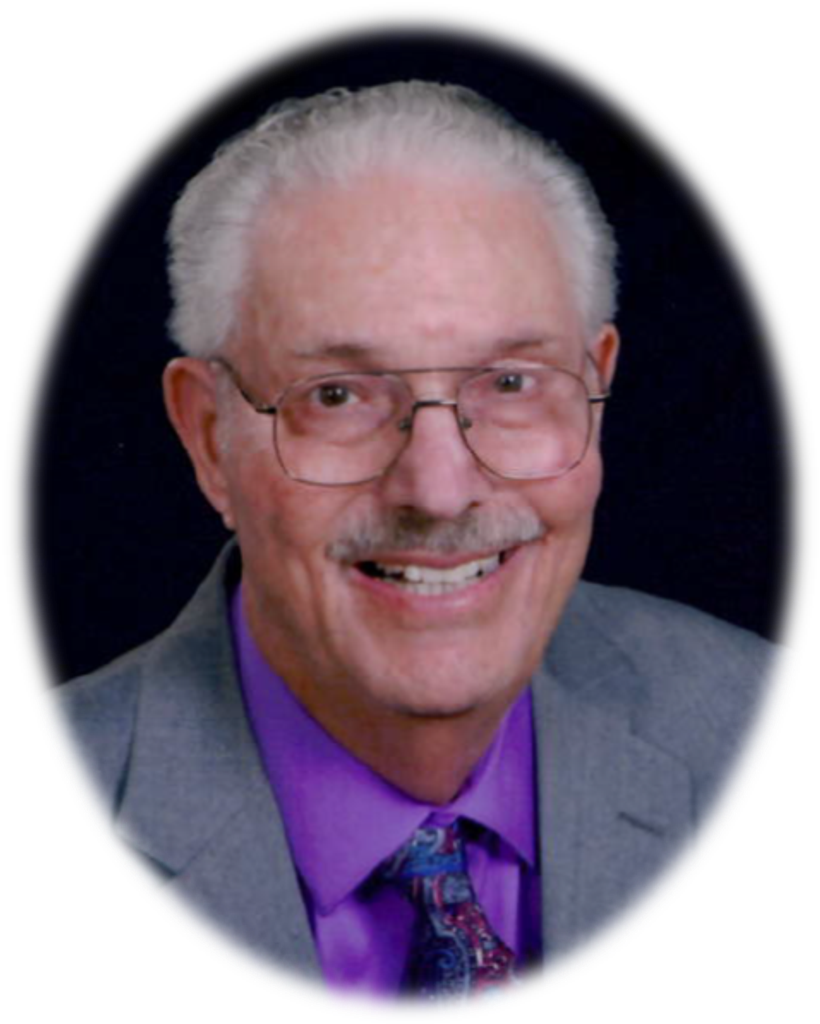
I hope I always remember “the word Joe spoke to me.”
The first time I heard Joe Schilling proclaim the Word was nearly sixty years ago inside a small white stucco church called St. Ann’s in Bovina, Texas. Joe was often the lector there, and because my grandparents’ farm bordered his in Parmer County, our families crossed paths naturally like neighboring fence lines. As a child I scarcely noticed the importance of any of it. He was simply another farmer reading Scripture aloud in a little church on the plains.
Then life wandered on for decades.
Thirty years later our paths crossed again at an ACTS retreat I did not even want to attend. I had been dragged there against my better judgment and had already decided beforehand that the whole thing was likely a waste of time. Then Joe stepped forward to speak.
I recognized him immediately from those distant memories at St. Ann’s and inwardly thought there was little chance that this old farmer and I had much in common. Yet grace delights in humiliating my assumptions.
Joe spoke plainly. No theatrical gestures. No polished performance. Just words worn honest by work, prayer, suffering, and faith. And somehow those words struck deeper than eloquence ever could. Ordinary things are more extraordinary than extraordinary things because we have grown too used to them. Joe’s words carried that sort of extraordinariness. They sounded like dirt roads, cattle guards, Scripture verses, and kitchen table wisdom all bound together.
Soon I found myself drawn into prison ministry beside him. For nearly a decade I became his sidekick. We drove countless miles speaking of faith, family, farming, catechism, and the strange mercy of God. By knowing Joe, I somehow came to know my own grandparents better, because he knew the land and people that had shaped them.
And before long Joe had shoved a Catechism into my hands and quietly pushed me toward catechetical ministry. It is no exaggeration to say that his spoken words became one of the great turning points of my life. They helped untangle misconceptions I carried about the Church and renewed my faith from the roots upward.
It occurs to me now that perhaps the greatest thing one human being can do is faithfully speak the Word in such a way that another person remembers it sixty years later.
3. Oratio
Lord Jesus Christ, eternal Word spoken by the Father, thank You for the voices You have sent into my life.
Thank You for lectors in little country churches, for old farmers who carried wisdom in their overalls, for prison ministry conversations, for Catechisms placed into uncertain hands, and for friendships that quietly redirected my soul.
Bless the memory of Joe Schilling. May the words he spoke continue bearing fruit in the lives of all he guided toward You.
Teach me also to speak carefully and kindly, for I never know when an ordinary conversation may become someone else’s remembered grace.
And when my own voice finally falls silent, let the only echo remaining be Your Word.
Modern people imagine history is changed primarily by celebrities, politicians, and famous thinkers. But Christianity insists history is usually changed by obscure saints in small places speaking faithful words to ordinary people.
The Kingdom of God advances largely through conversations no historian records.
A farmer reads Scripture aloud in a white stucco church. A reluctant retreatant hears him decades later. A Catechism changes hands. A prison inmate hears the Gospel. A teacher at The Glenn begins writing Lectio Divinas.
This is how grace travels through the world: not like lightning striking towers, but like seed passed hand to hand across generations.
Joe probably never imagined his words would still echo inside me all these years later. Yet that is the peculiar dignity of speech. God created the universe by speaking, and ever since then human words have possessed the terrifying ability either to wound souls or awaken them.
The world today is full of noise but starving for voices worth remembering.
Christ Himself understood this when He said, “Remember the word I spoke to you.” The Apostles survived persecution largely by remembering sentences.
And perhaps Heaven itself is simply the place where every true word finally finds its meaning.
5. Actio — In Light of Laudato Si’ and Synodality
Pope Benedict XVI spoke of an “ecology of man”, based on the fact that “man too has a nature that he must respect and that he cannot manipulate at will”.[120]
Pope Francis presents Saint Francis of Assisi as a model of living “in wonderful harmony with God, with others, with nature and with himself” (LS 10). These four elements offer a solid and integral foundation for the entire Encyclical. Integral ecology – the concept at the heart of LS – is a paradigm for analysis, discernment and commitment. Within integral ecology, LS encompasses numerous specific ecologies: environmental, economic, social, cultural, societal institutions, daily life, and overall human ecology. This list entails interconnectedness and consistency. When we better appreciate the interconnectedness of our natural world, we will better understand the interdependence of human and natural environments. After all, human persons are a part of nature, and so they need to have a proper relationship with it. When initiatives are proposed, there must be a consideration of the human person’s relationship with God, others and the natural world; “everything is connected” as Pope Francis often likes to remind us. This same principle applies to individual believers: living a full and meaningful life (Jn 10:10) entails caring for all aspects of a person’s flourishing. Not surprisingly, right after the list of ecologies, LS evokes the common good, namely “the sum of those conditions of social life which allow social groups, and their individual members, relatively thorough and ready access to their own fulfilment.” Here too, the “sum of conditions” implies interconnectedness and consistency. Further, while it is right to make use of specialized expertise in any particular field, this does not mean imposing personal preferences; rather, it is necessary to work comprehensively in consideration of all the above ecologies.
Pope Francis in Laudato Si’ reminds us that everything is connected, including generations of faith handed down through relationships, stories, and shared labor.
Action:
This week I will intentionally speak one encouraging word of faith to someone younger than myself. Not to lecture them, but simply to plant a seed.
I will also remember with gratitude those who spoke the Word into my own life: parents, grandparents, teachers, priests, retreat leaders, farmers, and friends.
For synodality begins not in programs, but in people walking together and speaking truth with charity.
“Spoken Word” is a song by American rock musician Alice Cooper, featured on his 1983 album DaDa. The track reflects the album’s darkly theatrical and experimental style, blending unsettling atmosphere with surreal, narrative-driven lyrics. It serves as a closing statement to one of Cooper’s most enigmatic periods.
A reflective piece reminding me that words possess weight long after they are spoken. Some words entertain for a moment; others quietly alter the direction of a life.
When We Last Spoke is a 2019 American drama film directed by Joanne Hock and based on the novel by Marci Henna. Set in small-town Texas during the late 1960s and 1990s, it follows two sisters abandoned by their parents and raised by their loving grandparents. The story explores themes of family, forgiveness, and faith, offering a nostalgic reflection on generational bonds. Key facts
A film about memory, family, and the enduring power of relationships—fitting for a Gospel that asks me to remember not merely ideas, but voices that shaped my soul.
8. Poetic Verse
An old farmer spoke in a little white church while dust blew across Parmer County.
I thought his words had vanished into the plains, yet decades later they still rise like wheat inside my soul.