Not sentiment. Not tolerance. Not avoidance of conflict.
But mercy that guards and protects the little ones, mercy that refuses to shame the sinner, mercy that keeps the heart open even when forgiveness feels hard.
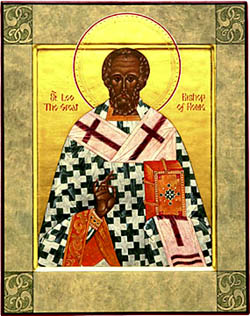
St. Leo the Great teaches that the strength of the Church is not in power or prestige, but in the mercy of Christ made visible.
Dilexi te reminds me that in Jesus’s time, the poor and the sick carried double suffering— bodily hardship and social shame. People assumed their condition meant God had rejected them.
“Jesus firmly countered this mentality by insisting that God “makes his sun rise on the evil and on the good, and sends rain on the righteous and on the unrighteous” (Mt 5:45). Indeed, he completely overturned that notion,…”
He restores dignity. He removes shame. He reveals a God who refuses to abandon anyone.
ORATIO
This morning I saw the black spots forming on the basil leaves, the frost marking what the plant can no longer withstand. It struck me— how tender life is and how easily harm can come.
And I heard today’s Gospel differently:
Be careful with one another. Your choices can wound. Your words can break. Your mercy can heal.
“Everything is connected. Concern for the environment thus needs to be joined to a sincere love for our fellow human beings and an unwavering commitment to resolving the problems of society.”
Lord, increase my faith so that I may choose mercy quickly, forgive readily, protect the fragile, and restore what has been damaged by coldness of heart.
CONTEMPLATIO
The basil will not survive the winter. But the seeds within it already hold next spring.
So it is with forgiveness. What seems lost becomes the beginning of something new.
I rest now in the God who never grows tired of forgiving me first.