

LECTIO — I Hear the Word
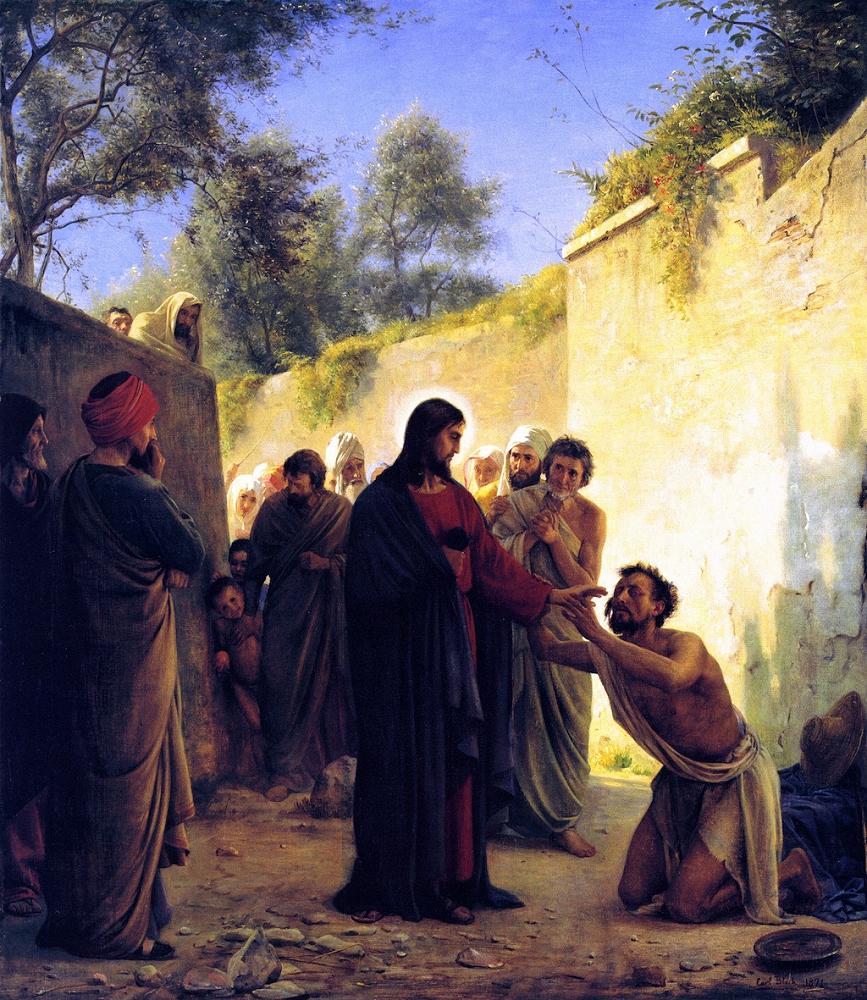
As Jesus approached Jericho, a blind man sat by the roadside.
When he heard Jesus was passing by, he cried out:


Everyone tried to silence him,
but he cried out all the more —
and Jesus stopped.
Jesus asked him, “What do you want me to do for you?”
He answered, “Lord, please let me see.”
And Jesus replied, “Have sight; your faith has saved you.”

Faith by itself, if it has no works, is dead.”
Dilexi te §29
Real faith hears the cry of the suffering—and responds.
MEDITATIO — I Let It Speak to My Story
Today the word that pierces me is cry.

The blind man cried out for mercy
and the crowd told him to stay quiet.
But he refused to disappear.
His very voice became his path to healing.
And I realize:
I, too, have lived in that space between crying out and being silenced.

This week, watching my chickens, I found myself asking,
“Why do we use ‘chicken’ to mean someone who is afraid?”
Their God-given vigilance is what keeps them alive —
not cowardice, but survival instinct.
And suddenly I felt the sting of recognition.

“In memory of the death of innocence of the victims of clergy sexual abuse. When innocence dies…a life stops. It is essential that we never forget.“
Because in the 1980s, in the Diocese of Amarillo,
I was not simply “afraid.”
I was made a victim.
If Boston is the fault line of the child sexual-abuse scandal that has convulsed the Roman Catholic Church, then few places have felt the aftershocks more deeply than the Diocese of Amarillo.
New York Times
I lived those aftershocks.


And just when I thought I had become a survivor,
1978 returned in 2018.
A homily in response to the McCarrick and Pennsylvania revelations
— a bishop saying he “could not comment” —
ignited a justified anger in me
because I knew the facts he was avoiding.
I took my cry public.
And soon, I was told I was not among the “faithful and loyal disciples”
and was barred from ministry.
Once again, I became a victim for raising my voice.
Then I watched Bishop Strickland —
once a voice praying the rosary outside the USCCB
in solidarity with a wounded Church —
follow a trajectory painfully similar to mine,
though in a different direction,
and now finds himself on the outside as well.
And somehow,
I hear the blind man’s cry overlapping with mine,
and with his.
A cry for justice.
A cry for truth.
A cry to be seen.
A cry not simply to see,
but to be seen.
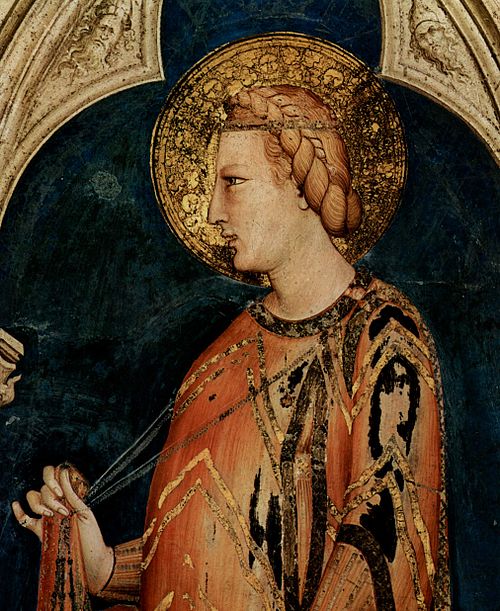
Saint Elizabeth of Hungary heard those cries.
She fed, clothed, healed, and lifted the poor
not because of strategy
but because love compelled her to respond.
And I realize:
the cry that God hears most clearly
is the one the world tries hardest to silence.
ORATIO — I Speak to God
Lord Jesus,
like the blind man,
I stand on the roadside of my own story
and cry out:
“Son of David, have pity on me!”

Let me see again —
see that my wounds are not wasted,
see that healing is possible,
see that You stop when I cry out,
even when the crowd does not.
And I pray for Bishop Strickland:
that he may move from pain to healing,
from isolation to communion,
from zeal that wounds
to zeal that sees.

Let us both learn again
that You never ignore the cry of the suffering —
and that You call us to hear the cries of others, too.
CONTEMPLATIO — I Rest in the Word
This morning, as my chickens startled at every shifting shadow,
I saw how instinct becomes both shield and burden.
They are not “cowards,”
but survivors—
creatures wired by God
to sense danger before it has a chance to devour them.
And in their trembling vigilance,
I recognized something of myself—
and something of Bishop Strickland.
Two men shaped by the same fire,
wounded by the same storms,
reacting from places we did not choose
but were pushed into.
We were not driven by fear,
but by survival,
by a longing for the Church to be whole.
Yet the grace I pray for now
is that we both continue the final transformation:
from survivors into healers,
from reaction into restoration,
from wounded instinct into a redeemed and steady vision.

This is what Jesus heard in the blind man’s cry.
This is what James calls “faith with works.”
This is what Saint Elizabeth lived.
This is what I long to reclaim in myself.
And this is what I hope for Bishop Strickland —
not isolation,
but a return to unity,
a return to listening,
a return to the Body he longs to defend.
Perhaps even here in the Diocese of Amarillo.
ACTIO — I Live It
It echoes the Gospel’s blind man who insists on being seen —
and it mirrors the survivor’s courage to speak,
persist, and help the Church confront what it would rather keep in the dark.
Today, I will respond to one cry I have been avoiding.
A person, a wound, a conversation, a truth —
I will not silence it.
I will listen,
as Jesus listened to the blind man,
and allow mercy to move me to action.

“Today, however, we have to realize that a true ecological approach always becomes a social approach; it must integrate questions of justice in debates on the environment, so as to hear both the cry of the earth and the cry of the poor.”
— Laudato Si’ §49

