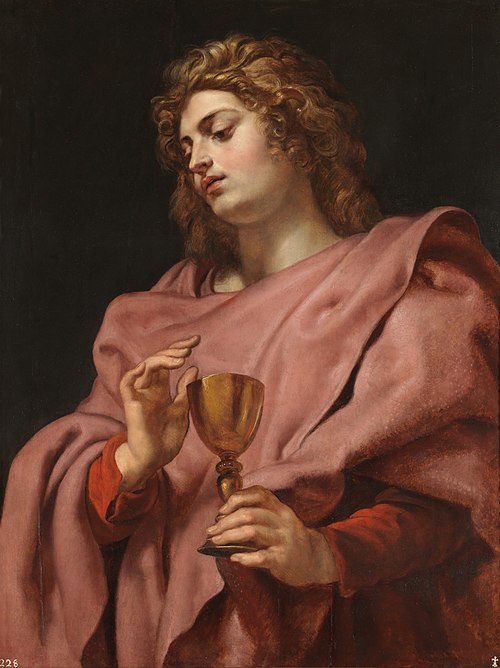
Today the Scriptures whisper, rather than shout.

They speak of the other voice—
not the loudest,
not the official,
not the one who arrives first and takes possession.
John tells me that faith begins with what was heard,
what was seen,
what was touched—
not with what was controlled or managed.

In the Gospel, Peter enters the tomb first.
He has rank, authority, precedence.
But belief does not come from precedence.
It comes to the other—
the disciple who loved,
who waited,
who saw without grasping.
He does not rush in.
He does not announce himself.
He simply sees—and believes.
And suddenly I understand:
the Resurrection was first recognized
not by power,
but by love that allowed itself to remain second.
“If Boston is the fault line of the child sexual-abuse scandal that has convulsed the Roman Catholic Church, then few places have felt the aftershocks more deeply than the Diocese of Amarillo.”
New York Times
August 24, 2002


“In memory of the death of innocence of the victims of clergy sexual abuse. When innocence dies…a life stops. It is essential that we never forget.”
“Their goal was that of transmitting to young people ‘not only secular knowledge but also the wisdom of the Gospel, teaching them to recognize, in their personal lives and in history, the loving action of God the Creator and Redeemer.’”
Dilexi te, §69
As one who chooses to be the “other,” can I make it my aim to transmit to victims of clergy abuse in the Diocese of Amarillo not only a truthful account of what happened, but also the wisdom of the Gospel—helping them to recognize, in their own lives and in history itself, the loving and redeeming action of God?
Meditatio (Reflection)
Today I ask whether I can learn to be the other.

Photo used by permission of Douglas Kirkland/Corbis via Getty Images
Not the first voice.
Not the one who must win.
Not even the one who must be heard.
I may be among the first to ask for Synodality regarding the tribute to Bishop Matthiesen during this Centennial,
but perhaps my calling is not to stand at the center—
only to remain present at the edge.

John did not need to outrun Peter.
He only needed to love enough to recognize the truth when it appeared.

Below: A Fallen Centennial Banner
If Synodality is real, then it must make room for the “other”:
the survivor,
the uncomfortable question,
the memory we wish were buried but is not.
Let me not demand entry.
Let me wait at the threshold.
Let me see clearly,
and believe without possession.
Contemplatio (Chestertonian synthesis)

It is a very modern error to assume that truth belongs to whoever arrives first.
Christianity, being cheerfully paradoxical, insists on the opposite:
truth belongs to the one who waits long enough to love it.
John outruns Peter, yes—
but he does not enter first.
He pauses, and that pause becomes belief.
The world trusts speed.
The Church is tempted to trust authority.
But God entrusts revelation to the other—
the one who does not claim ownership.
In a synodal Church, the most important voice may be the one that refuses to shout.
Oratio (Prayer-Day 18)

O God,
who through the blessed Apostle John
revealed the mystery of love that believes without grasping,
grant that as I seek Synodality during this Centennial,
I may not strive to be first,
but faithful;
not victorious,
but truthful;
not loud,
but loving.
Teach me to stand beside the “other,”
especially those whose voices were once ignored,
and to trust that your truth rises
even when I do not force the stone away.
Through our Lord Jesus Christ, your Son,
who lives and reigns with you
in the unity of the Holy Spirit,
God, for ever and ever.
Amen.
Actio (Action — Laudato si’ & Synodality)

“On the other hand, it is troubling that, when some ecological movements defend the integrity of the environment, rightly demanding that certain limits be imposed on scientific research, they sometimes fail to apply those same principles to human life.”
Laudato si’ §136
Today I will practice synodality by making space rather than filling it:
listening without correcting,
remembering without rewriting,
and allowing the “other” to remain other—
not absorbed, not erased, but honored.
🎵 “In the Bleak Midwinter”
Sometimes it kneels quietly beside the tomb
and waits long enough to recognize love.
🎬Movie: The Christ Child: A Nativity Story

Email to Bishop Zurek
Subject: Request for Dialogue Regarding the Tribute
Your Excellency,
I am writing to apologize if any of my previous communications about the tribute to Bishop Matthiesen came across as threatening or coercive. That was not my intention, and I regret any words that suggested pressure rather than prayerful discernment.
Silence has been painful, but I remain committed to walking with the Church, not against her. I respectfully ask for conversation, not conflict, so that this matter may be addressed in the light of truth, charity, and healing.
Thank you for your time and pastoral care.
Respectfully in Christ,
Darrell Glenn
Diocese of Amarillo

My Story
“In memory of the death of innocence of the victims of clergy sexual abuse. When innocence dies…a life stops. It is essential that we never forget.“


- Bishop Matthiesen, who rode the white horse of public activism even as he brought abusive priests into our diocese such as John Salazar—wounds that still mark us today. I spoke with him often, pleading with him to reconsider his “no regrets” about bringing those priests here…
- Bishop Yanta, who sought to enforce the Dallas Charter even when Bishop Matthiesen resisted him, and who bore the personal and pastoral cost of doing so. I met with Bishop Yanta about Bishop Matthiessen’s “no regrets” stance. He listened. He believed me. He acted where he could. And when he retired, he urged me—quietly but firmly—to keep speaking out.
- Bishop Zurek, who told the Diocese of Amarillo he had “no facts” about the Philadelphia report even as Amarillo’s connection to that tragedy was headline news. When I continued to speak out, as Bishop Yanta had once urged me to do, he later wrote that I was not among the faithful and loyal disciples whom the Lord Jesus desires.