The Apostles are walking toward Jerusalem while simultaneously walking away from understanding. Jesus speaks plainly of suffering, mockery, scourging, and death, while James and John immediately begin maneuvering for prestige. They want glory seats beside the throne while Christ is describing a Cross. Yet I cannot mock them too harshly because I do exactly the same thing.
2. Meditatio
My Grandson Building a Shelter for Wayward Lizards
I am all about seeking “new paths for the common good” when those paths happen to pass conveniently through my own comfort and ambitions. I long for the glory of being Catholic far more than the humiliation of becoming Christlike.
As the saying goes, “You can’t make an omelet without breaking a few eggs.” The trouble is that I usually imagine the eggs being broken belong to somebody else.
I want the grandeur of the Gospel without the ransom. I want resurrection without crucifixion. I want to speak nobly about service while quietly arranging life so that I myself remain relatively untroubled.
Yet Christ measures life differently. The modern world measures life by accumulation: how much influence, comfort, recognition, security, or control one acquires before death arrives. Jesus measures life by expenditure. A life is not proven valuable because it is protected at all costs, but because it is poured out.
This unsettles me deeply because I spend much of my energy trying to preserve my own little kingdom at The Glenn: my routines, my ideas, my projects, my peace. But the Gospel keeps intruding with the dangerous suggestion that life becomes larger precisely when it is given away.
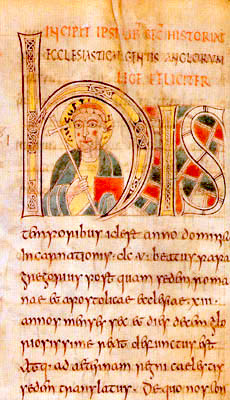
Saint Augustine of Canterbury crossed seas and entered pagan England not because it was safe or advantageous, but because he believed souls were worth inconvenience. He surrendered one life in order to receive another. Christianity spread not through men protecting comfort, but through men and women willing to spend themselves for something eternal.
Perhaps this is why Jesus speaks of ransom. A ransom costs something. Love that costs nothing is usually sentimentality wearing religious clothing.
And perhaps my greatest fear is not suffering itself, but discovering that the Cross is not merely an interruption to life — it is the road by which life becomes truly alive.
3. Oratio
Lord Jesus Christ, You gave Your life as a ransom for many, while I spend so much of mine bargaining for comfort.
Forgive me for wanting the appearance of holiness more than the surrender holiness requires.
Teach me to serve without calculation, to love without demanding applause, and to follow without constantly negotiating terms.
Through the intercession of Saint Augustine of Canterbury, give me courage to carry the Gospel into difficult places, especially the difficult places within my own heart.
Break open my selfishness as bread is broken at the altar, so that my life may become nourishment for others.
And when I fear the Cross, remind me that no resurrection exists without it.
Chesterton delighted in paradox because Christianity itself is the grand paradox: the way up is down; the first are last; the King reigns from a Cross.
Modern man speaks endlessly about improving life while often forgetting what life is for. We build technologies to save time and then discover we no longer know what to do with the time saved. We prolong existence while neglecting the soul.
Christ alone reveals that life is not merely biological persistence but sacrificial communion.
Saint Augustine of Canterbury must have appeared absurd to many contemporaries: a monk traveling into uncertainty armed with little more than faith, liturgy, and stubborn hope. Yet civilizations are transformed precisely by such “foolish” acts. The saints are history’s proof that humanity advances not merely through power, but through sanctity.
Indeed, the Cross is the most practical thing in the world because selfishness is the least practical thing in the world. Entire societies collapse under the weight of men determined to preserve themselves at all costs.
The saint, meanwhile, spends himself extravagantly and somehow multiplies life around him.
The world calls this losing one’s life. Christ calls it saving it.
5. Actio — In Light of Laudato Si’ and Synodality
Saint Francis of Assisi reminds us that our common home is like a sister with whom we share our life and a beautiful mother who opens her arms to embrace us.
Our knowledge of one another is first fostered in families, and families often integrate diverse cultures, achieving a kind of multilateralism from below. This can spawn broader forms of involvements, where activists from different countries can help and accompany each other, put pressure on leaders and governments, and counterbalance the negative influence of marketing and false information (cf. LD 29; 38). By adopting responsible, sustainable, and supportive behaviours, families can create a new culture. The fact that “personal, family, and community habits are changing is contributing to greater concern about the unfulfilled responsibilities of the political sectors and indignation at the lack of interest shown by the powerful. Let us realize, then, that even though this does not immediately produce a notable effect from the quantitative standpoint, we are helping to bring about large processes of transformation rising from deep within society” (LD 71).
In Laudato Si’ Pope Francis reminds us that “love, overflowing with small gestures of mutual care, is also civic and political.”
Action:
Today my action will be to perform one hidden act of service without seeking recognition for it.
Synodality means walking together not as competitors for prestige, but as servants carrying one another toward Christ. I will examine where I seek status more than communion, and where I protect my own comfort more fiercely than the dignity of others.
“That’s Life” becomes far more Christian when one realizes life is not merely riding high in April and shot down in May, but learning that both triumph and suffering can become instruments of grace.
The “sweet life” eventually reveals its emptiness when pleasure becomes detached from purpose. Christ offers not merely a sweet life, but a meaningful one — though meaning usually arrives carrying a Cross.
8. Poetic Verse
I sought a life both safe and grand With Cross removed by my command Yet Christ walked on through dust and pain To ransom hearts with love unstained
The saints crossed seas, the martyrs flame While I still bargain over name But life grows larger, strange yet true When broken bread is given through.